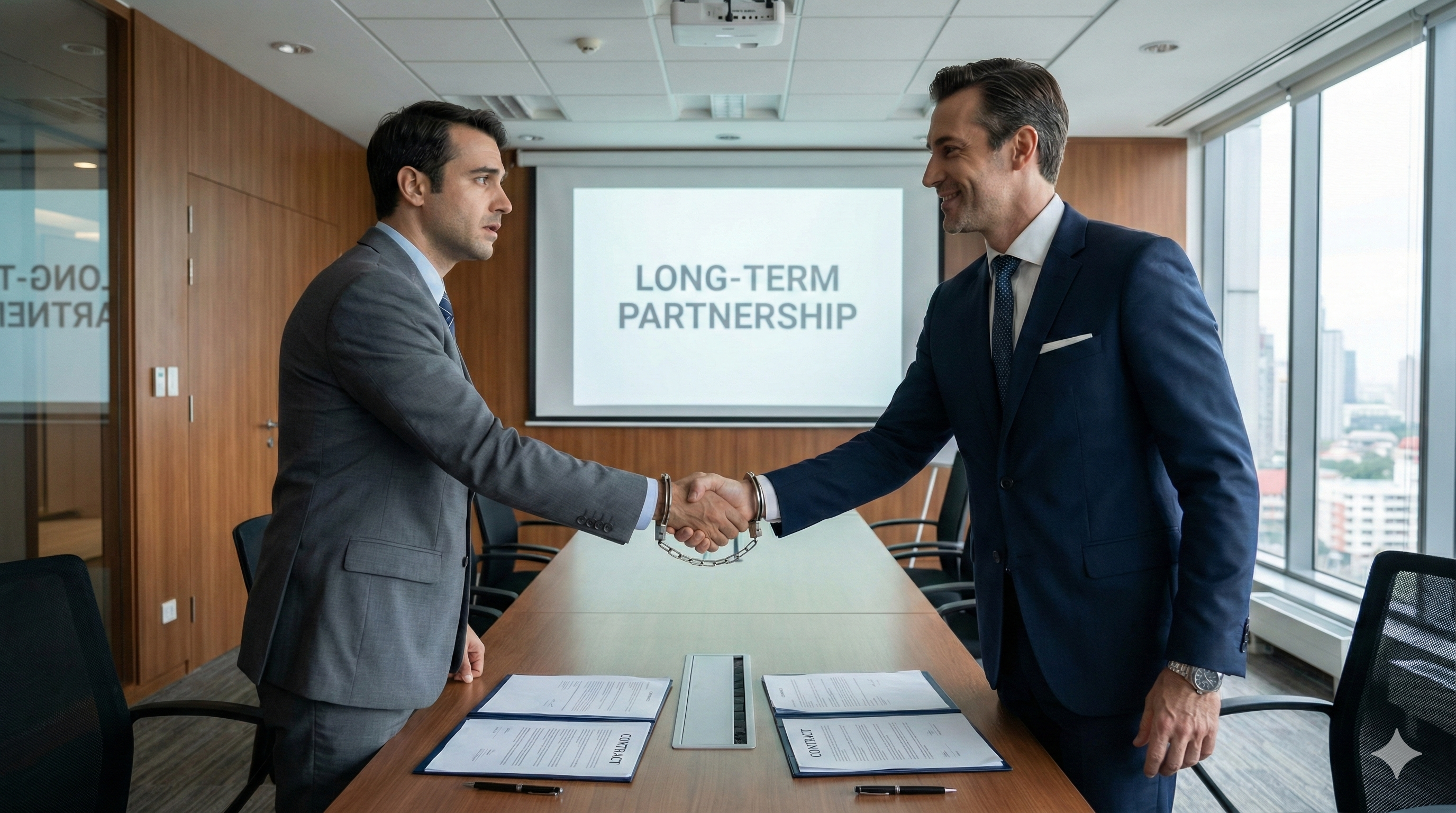
For almost 30 years, I have been dedicated to application development and architecture, and during that time I have understood one fundamental thing: Software should be a tool and an assistant, not a trap and a commitment.
When I wrote my first lines of code in 1987, one thing fascinated me: absolute control. The computer did exactly what I told it to do. No hidden conditions, no black boxes. It was clean and fair.
Twelve years later, when I started professionally developing applications in 1999, I encountered a completely different world. I worked for companies that invested millions into systems that ultimately didn’t belong to them. I collaborated with managers who became hostages of their suppliers.
I saw great business ideas that failed because the software supplier said, “That’s not possible,” or the manager concluded, “We simply don’t have the resources for that.” Why? Because at that point, the solution was dependent on a supplier from which it was no longer possible to walk away.
These experiences shaped me. When we started building the foundations for the Task Monitor platform at HK-PRESS, I knew I wanted to do it differently.
The key question is: How do you know you are truly successful? By how many customers you managed to lock into a trap that is very difficult to escape from, or by how many of your customers want to work with you without being forced to?
I am clear about this. I want to work with customers who see me as a partner with whom they want to achieve a common goal without obligations.
Technical freedom in practice
I don’t want to lecture anyone on how to choose software for their own business. Every company has different needs and different preferences. I just want to share the reason why we decided to go against the current with the Task Monitor platform and prioritize technical freedom over easy revenue from licensing fees.
Most of the market today is moving towards the SaaS (Software as a Service) model. It’s convenient. You rent a service, pay a monthly fee, and don’t worry about anything. Until a problem arises.
For me personally, certainty is the most important thing in business. And you cannot have that if you build your house on land you don’t own. That’s why we designed the business architecture on which the Task Monitor platform stands based on these fundamental principles:
- No Vendor Lock-in: We believe that if a customer pays for a custom solution, they have the right to own it. Not to rent it.
- Open code: Code must not be a secret. It must be readable, auditable, and understandable for any capable programmer.
- Standard technologies: We use PHP, MySQL/MariaDB, and Linux. Not because they are “free,” but because they are immortal and multi-platform. We don’t want our clients to depend on whether our company exists. We want their system to be able to function and evolve for decades, regardless of us.
Why do you do it this way? And does it work for you?
People in the industry often ask me: “Dan, why don’t you keep the rights to the applications and just charge licensing fees? It would be much more profitable for you business-wise.”
Maybe in the short term. But my experience since 1999 shows me something different. The strongest partnerships are not formed on the basis of a contract that prevents you from leaving. They are formed on the basis of trust and freedom, as also demonstrated by our subsidiary brand SmartWebApps, under which we offer our solutions.
Our customers become partners after the solution is handed over into operation. We have no mandatory obligations to each other, yet we still cooperate. Most of our customers continuously continue developing their applications with us, and the same majority have already implemented many more solutions than they originally intended.
Everyone has already correctly recognized from their experience that the most valuable thing in our cooperation is not the code we deliver, but our knowledge and experience, which we offer them daily in the form of shared “know-how.”
What does this imply for us?
Technical freedom for us is not just a marketing slogan. It is a fundamental characteristic of the Task Monitor platform. In our business philosophy, we have prioritized partnership and a common goal over profit and long-term commitments.
If you are currently dealing with digitalization and optimization of key processes in your company, I recommend you think about one thing: Will your supplier be focused on a common goal, or primarily on their own profit?
If the topic of technical freedom interests you and is relevant to you, contact us. We would be happy to discuss all your questions, including those that others can hardly answer.